



Ms. S’s mother had long suffered from fatigue and discomfort due to orthostatic dysregulation. While functional medicine and orthomolecular nutrition therapy helped alleviate her symptoms, she felt they never fully resolved. In her search for treatment options, she encountered fecal microbiota transplantation (FMT). We spoke with both Ms. S’s mother and Ms. S herself.
Profile
・Disease Name: Small Intestinal Bacterial Overgrowth (SIBO), Autonomic Dysfunction, Chronic Fatigue Syndrome
・Migration Period: March 14, 2025 to April 19, 2025
Number of Transplants: 6-session course
・Transplant-designated medical institution:
Shirotani Bio Wellness Clinic Internal Medicine & Orthodontics Kobe Sannomiya
(Formerly: LOOKS Ashiya Clinic)
Interviews
How did you learn about the treatment called fecal microbiota transplantation?
Ms. S’s Mother:
While studying functional medicine and molecular nutrition and trying various treatments, we couldn’t achieve the desired improvement. A major issue during treatment was the lack of digestive enzymes. As we investigated further, we ultimately arrived at the gut flora transplant at Luke’s Ashiya Clinic.
Please tell us why you decided to undergo the intestinal flora transplant at our research institute.
Ms. S’s Mother:
For orthostatic dysregulation, functional medicine and orthomolecular nutritional therapy improved symptoms by about half, but did not fully cure it. Dietary changes caused discomfort, leading me to suspect, “Could it be low gut flora?” We underwent a flora test and decided on transplantation based on the results.
How have your symptoms changed following the transplant?
Ms. S’s Mother:
Before the transplant, the day after exercising, or after changes in atmospheric pressure, rainy weather, or eating certain foods—especially sweets, greasy foods, or garlic dishes—I would experience headaches, nausea, dizziness, and abdominal pain, making it impossible to move my body. Furthermore, the day after eating sweets or greasy foods, my mind would feel foggy, and my concentration would decline.
During the first to third transplant sessions, I strictly managed my diet, avoiding sweets and greasy foods. I clearly noticed improved energy efficiency and reduced fatigue. Until the third session, I experienced mild headaches and dizziness upon standing. After completing the sixth session, I felt less fatigued, but my susceptibility to changes in atmospheric pressure, catching colds, and overall poor health has not improved.
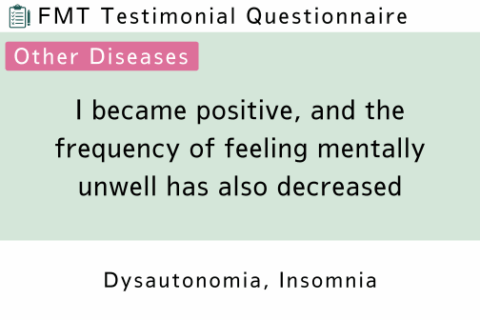
Compared to before the transplant, I increasingly felt more comfortable even when feeling unwell. Before, I would often push through and go to school even when thinking “I feel a bit rough,” but after the transplant, that almost completely disappeared. I started waking up feeling refreshed in the mornings and going to school more often.
However, the moment the rainy season began, I experienced nausea, headaches, and fatigue that lasted for two weeks, preventing me from attending school.
As soon as the rainy season ended, we resumed going to school, but we’ve been getting sick with infectious diseases at a pace of about once every two months.
Depending on the results of the examination after the sixth session, we will consider adding three more sessions if necessary.
This year, as a high school senior preparing for entrance exams, I’ve set new goals after my transplant to aim for my desired university and am gradually resuming my studies. I feel choosing this treatment was the right decision.
What changes have you seen in your eating habits?
Ms. S’s Mother:
During the transplant, she didn’t snack at all. However, after the transplant ended, when she tried eating ramen and sweets, she felt fine the first time but became unwell the second time. She experienced orthostatic nausea, dizziness, and headaches, similar to adrenal fatigue. It seems continuing to eat these foods isn’t good for her.
I think to myself, “Maybe once a month is okay as a treat.”
What Mr. S continues to do to maintain a healthy gut environment
・Establishing a dietary pattern to prevent worsening of autonomic nervous system symptoms while building a fundamental foundation
・Eat junk food as a treat
Finally.
Mr. S himself told us that compared to before the transplant, he now feels more comfortable even when his health is poor, and the sensation of “feeling worn out” has almost disappeared. His mother also supports him by establishing a consistent meal pattern to stabilize his autonomic nervous system symptoms. I believe the stability in his physical and mental health is what gives him this refreshed feeling. FMT is not a magic cure-all; it only works effectively when combined with well-balanced meals, sufficient sleep, and other healthy lifestyle habits. We sincerely hope you can enjoy a happy daily life in harmony with your gut bacteria.
Mr. S, Mrs. S, thank you for sharing your valuable story.
Important Notes Regarding Testimonials
- This article is based solely on the personal experiences of patients and their families and does not guarantee the effectiveness or course of treatment.
- The progression of symptoms, response to treatment, and degree of recovery vary from person to person, and not all patients will achieve the same results.
- When selecting or implementing a treatment method, be sure to consult thoroughly with your primary physician or specialist. Make your decision after comprehensively considering your own medical condition, constitution, lifestyle, and other factors.
- The treatment details described in this article (transplant method, course, duration, cost, etc.) are specific to a particular patient’s case and may not apply identically to all medical institutions or situations.
- This testimonial is published at the request of the patient and their family, with care taken to ensure individuals cannot be identified.