



This interview article shares the experience of Ms. T, who suffered from chronic health issues and chose to undergo a fecal microbiota transplant. We spoke with her about the changes in her health and daily life following treatment at Luke’s Clinic, as well as the steps she takes to maintain her health on a daily basis.
Profile
・Disease Name: Irritable Bowel Syndrome / Autonomic Nervous System Disorder
・Migration Period: April 3, 2025 to April 25, 2025
・Number of transplants: 3-session course
・Transplant-designated medical institution:
Shirotani Bio Wellness Clinic Internal Medicine & Orthodontics Kobe Sannomiya
(Formerly: LOOKS Ashiya Clinic)
Interviews
What prompted you to visit Luke’s Ashiya Clinic?
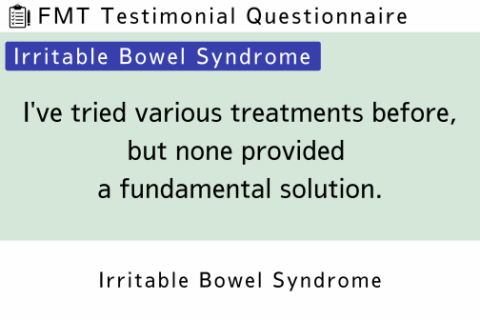
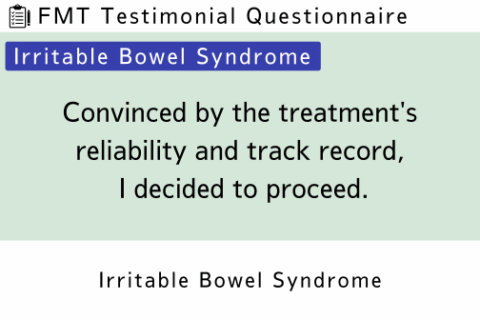
Mr. T: I had been severely troubled by reflux esophagitis and irritable bowel syndrome. At the hospital I previously attended, they only prescribed acid-suppressing medications, which didn’t provide a fundamental solution. I learned about Luke’s Ashiya Clinic online. Their website explained mechanisms like SIBO (small intestinal bacterial overgrowth) in detail, so despite the high cost (as it’s private treatment), I decided to visit. When I first heard about FMT (Fecal Microbiota Transplantation), I was a bit surprised at the idea of receiving someone else’s stool. However, after reading the explanation, I understood and had no reservations. Because my health concerns were deep and I had researched extensively, I grasped the concept relatively smoothly.
How are your main symptoms and any changes in them?
Mr. T: My biggest concern over the past few years has been gas buildup in my stomach. After the transplant, this gas buildup feels “slightly reduced,” and I especially feel that burping has decreased significantly. Regarding my diet, I was already quite careful about it even before the transplant.
However, my symptoms are not stable; they fluctuate between improvement and relapse. Immediately after the transplant, I felt a significant temporary improvement, but there are still times when I don’t feel well.
Please tell me why you decided to get an intestinal flora balance test.
Mr. T: When I first visited Luke’s Clinic, I heard they offered various tests and decided to have everything checked that concerned me. Although the cost was high, I was drawn to the idea of visualizing my own flora balance and opted to undergo the testing.
How is your sleep quality?
Mr. T: For a while, I felt my sleep quality had improved, but now it’s not so good. While I fall asleep easily, I sometimes wake up in the middle of the night or wake up too early in the morning. I feel environmental factors like rising humidity and temperature are also having an impact.
What Mr. T continues to do to maintain a healthy gut environment
・Consume a variety of foods.
・Get plenty of dietary fiber.
・Avoid wheat, dairy products, refined sugar, artificial sweeteners, etc.
・Get plenty of sleep. Engage in moderate exercise such as aerobics.
・Don’t be too hard on yourself.
Finally.
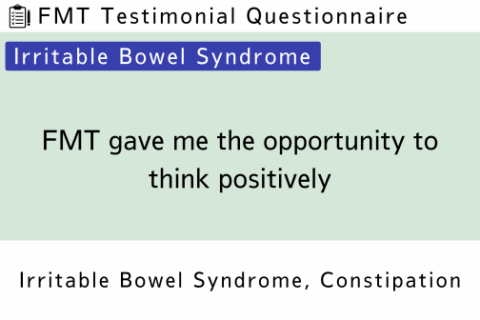
From Mr. T’s interview, it appears that fecal microbiota transplantation holds the potential for fundamental improvement, rather than merely symptomatic treatment, for his long-standing health issues. While some improvements, such as reduced gas symptoms, have been observed, his overall condition currently fluctuates between periods of improvement and relapse.
Fecal microbiota transplantation does not necessarily lead to a steady improvement in symptoms. Instead, symptoms may fluctuate, improving and then worsening again, before gradually stabilizing. Even so, once the transplanted bacteria become established, they do not disappear. It is important to maintain awareness of nurturing them through appropriate care.
Mr. T, thank you for your valuable insights.
※This article is solely based on Mr. T’s personal experience. Treatment results vary from person to person, and similar outcomes are not guaranteed. Always consult a specialist regarding specific treatments.