

Recruitment of children with Autism Spectrum Disorder (ASD) aged 5 to 12 to participate in this specified clinical research has now closed. Thank you very much for the many inquiries and applications.
The interim report for this clinical research will be presented at the 7th Academic Conference of the Japan FMT Research Association on September 17. We sincerely appreciate your continued understanding and support as we work to establish this as a medical treatment that everyone can undergo with peace of mind.
1. Introduction
Clinical research refers to medical research conducted with the participation and cooperation of patients to evaluate the safety and efficacy of therapeutic and diagnostic methods. Many of the treatment and diagnostic methods currently in use have advanced through clinical research conducted both in Japan and overseas.
Unlike “clinical trials” sponsored by pharmaceutical companies, this research is initiated and conducted primarily by researchers (physicians).
This specified clinical research was approved by a Certified Review Board (CRB), subsequently authorized by the directors of each participating medical institution, and initiated after the Lead Principal Investigator submitted the principal clinical research plan to the Minister of Health, Labour and Welfare.
2. About Autism Spectrum Disorder (ASD)
Autism Spectrum Disorder (ASD) is a developmental disorder characterized by difficulties in social interaction, strong hyperfixations or repetitive behaviors, and sensory sensitivities.
ASD was formally introduced as a diagnostic term in 2013 with the publication of the Diagnostic and Statistical Manual of Mental Disorders, Fifth Edition (DSM-5) by the American Psychiatric Association. Since then, conditions previously referred to by various names—such as autism, pervasive developmental disorder, and Asperger syndrome—have been consolidated under the umbrella term ASD.
ASD is considered a brain dysfunction caused by a complex interplay of various factors.
The incidence of ASD has been increasing annually both in Japan and internationally, becoming a major societal concern.
The definitive cause of ASD remains unknown, and no fundamental cure has been developed yet. Current management strategies to alleviate symptoms and challenges associated with ASD include “environmental adjustments tailored to ASD symptoms” and “counseling/psychotherapy.” However, these approaches lack immediate efficacy, and there is currently a shortage of specialists capable of administering them.
Furthermore, pharmacotherapy options—such as atypical antipsychotics (e.g., risperidone, aripiprazole), mood stabilizers (e.g., valproic acid), and psychostimulants—are effective only for peripheral symptoms of ASD and have not been shown to be effective against core symptoms.
Consequently, there is a strong demand in this field for the development of new treatments that offer rapid onset and high effect size.
3. What is Fecal Microbiota Transplantation (FMT)?
Fecal Microbiota Transplantation (FMT) is also known as gut flora transplantation. It is a therapeutic procedure in which a fecal microbial solution prepared from healthy donor stool is transplanted into a patient’s intestinal tract with the aim of improving the gut microbiota.
The novel FMT method (hereinafter referred to as the NanoGAS-FMT method) does not require “pre-FMT antibiotic administration or bowel preparation,” which are routinely performed in conventional methods. Instead of the normal saline solution used in conventional methods to dissolve stool, it utilizes a stable hydrogen nanobubble water independently developed by Symbiosis Inc. It is a child-friendly method that administers the solution into the rectum using a thin, flexible rubber tube without the use of an endoscope.
Furthermore, it is being developed as a novel approach that administers a minimal dosage—approximately 1/1,000th of the bacterial count used in conventional methods.
Figure 1. Differences between the NanoGAS-FMT Method and Conventional FMT Method (Conceptual Diagram)
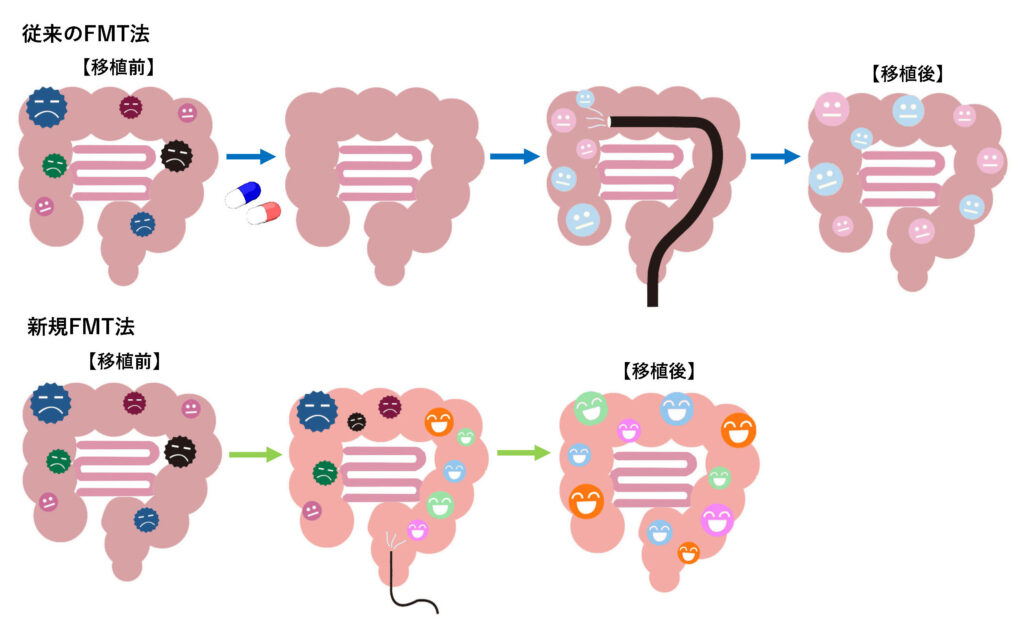
Key differences are as follows:
①NanoGAS-FMT Method
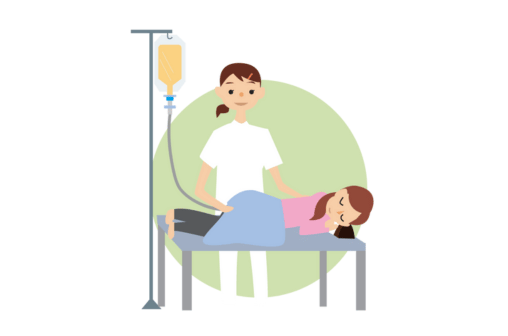
A fecal microbial solution is administered into the rectum close to the anus of the child with ASD using a thin, soft rubber tube. The procedure takes approximately 3 to 5 minutes, completing the transplantation.
②Conventional FMT Method (Example from the University of Arizona)
・Daily consecutive administration of the antibiotic vancomycin for 2 weeks.
・Bowel cleansing with PEG (polyethylene glycol) 2 weeks later.
・Oral (or rectal) administration of a high volume of fecal microbial solution (over 1,000 times the bacterial count of the NanoGAS-FMT method) for 2 consecutive days.
・Daily administration of capsules containing approximately 10 times the bacterial count of the initial NanoGAS-FMT dose for approximately 60 consecutive days.
・Concurrent administration of gastric acid suppressants for approximately 60 consecutive days.
In November 2022, the U.S. Food and Drug Administration (FDA) approved “Rebyota,” a fecal microbiota product developed by Ferring Pharmaceuticals, for the treatment of recurrent Clostridioides difficile infection (rCDI). This milestone attracted significant attention as it is expected to accelerate clinical research and trials of FMT for various diseases.
(Reference: https://www.ferring.co.jp/category/global-2022/ )
Furthermore, in preceding studies and ongoing clinical trials (one step beyond clinical research) conducted in the U.S. and China regarding “FMT treatment for children with ASD,” the lower age limit of eligible participants has been lowered to 2 and 3 years old, respectively, as shown in the table below.
The U.S. trials are approved by the FDA, and some in China are approved by the CFDA, known for its strict regulatory standards.
Table: Target Age Groups in Preceding Studies and Ongoing Clinical Trials
| Conducting Institution | Stage | Target Age Group |
| University of Arizona | Preceding Clinical Research | 7 – 17 years |
| old Third Military Medical University | Preceding Clinical Research | 3 – 17 years |
| old Progena Biome | Clinical Trial | 2 years old and above |
| Ventura C. | Clinical Trial | 2 years old and above |
| Children’s Hospital Los Angeles | Clinical Trial | 5 – 17 years old |
| University of Arizona | Clinical Trial | 5 – 17 years |
| old Wuhan University | Clinical Trial | 3 – 18 years old |
Having obtained approval from the Ethics Committee, we previously applied the “NanoGAS-FMT method” to treat an initial cohort of 14 children with ASD aged 5 to 12.
Upon analyzing the outcomes of this private-pay treatment with informed consent from the parents, we found that the NanoGAS-FMT method reduced ASD symptoms in these children.
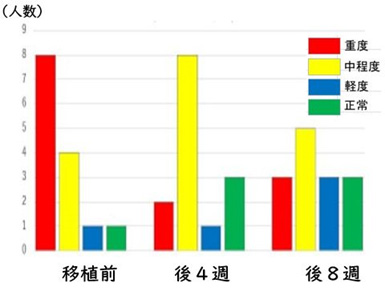
Figure 2 illustrates the changes in severity assessed by the SRS-2 for individual cases.
At 8 weeks post-transplantation, the “NanoGAS-FMT method” significantly reduced ASD symptoms in 10 out of the 14 patients (71%), including 6 patients categorized as severe.
Figure 2. Efficacy of “FMT using SHIN-1” for ASD
In the treatment outcomes of the aforementioned 14 cases, adverse events of fatigue and constipation were observed in 1 case, but these were mild and transient.
4. Study Methodology
1) Eligible Children
This study targets children diagnosed with ASD who meet the following criteria.
Please note that participation may be declined based on the attending physician’s judgment.
【Inclusion Criteria】
・Children aged 5 to 12 who have been diagnosed with ASD by a specialist certified by the Japanese Society of Child Neurology, the Japanese Society of Psychiatry and Neurology, the Japanese Society for Child and Adolescent Psychiatry, or the Japanese Society of Pediatric Psychiatry and Neurology (*1: Diagnostic certificate required; gender is not specified).
・Children judged by the Principal Investigator to be in generally good physical health, excluding gastrointestinal symptoms.
・Children whose assent for study participation can be obtained in writing or, if necessary, orally or through illustrations.
・Children whose written informed consent for participation can be obtained from a legally acceptable representative (parent or guardian).
*1: If you have not yet obtained a diagnostic certificate, please refer to the following websites to obtain one:
List of Certified Pediatric Neurologists (The Japanese Society of Child Neurology):
https://www.childneuro.jp/modules/senmoni/
List of Board-Certified Psychiatrists (The Japanese Society of Psychiatry and Neurology):
https://www.jspn.or.jp/modules/senmoni/
List of Certified Physicians (The Japanese Society for Child and Adolescent Psychiatry):
https://child-adolesc.jp/nintei/ninteii-ichiran/
List of Certified Physicians (The Japanese Society of Pediatric Psychiatry and Neurology):
https://www.jsppn.jp/physician
【Exclusion Criteria】
・Currently undergoing pharmacological treatment.
・Received antibiotics (excluding topical antibiotics) within the past 3 months.
・Undergone FMT within the past 12 months.
・Diagnosed with single-gene disorders presenting ASD-like symptoms (e.g., Fragile X syndrome, Rett syndrome, Joubert syndrome, etc., which may affect efficacy evaluation).
・Presenting with neurosurgical or neurological diseases.
・Receiving tube feeding.
・Underweight/malnourished (weighing less than 65% of standard body weight).
・Undergone surgery within the past year or scheduled for surgery within the next 6 months.
・Currently participating in other clinical trials.
・Judged unsuitable for participation by the attending physician for any other reason.
2) Study Design
The efficacy and safety of the “NanoGAS-FMT method” will be evaluated by comparing pre- and post-administration test values of the enema solution. Due to ethical considerations, this study will be conducted as a single-arm study without a control group.
3) Procedures for Fecal Microbiota Transplantation (FMT)
① Donor Health Status:
Stool is provided by registered volunteer donors. Attending physicians evaluate and verify donor health through physical examinations and testing (a questionnaire containing approx. 150 items and extensive blood tests listed below) conducted approximately once every 2–3 months.
Questionnaire items: Age, sex, height, weight, history of antibiotic use, vaginal birth/breastfeeding history, medical history, medication/supplement use, travel history, dietary habits, sleep habits, etc.
Physician examinations:
- Blood pressure, pulse rate, auscultation, urinalysis
- Complete blood count (CBC);
- Biochemistry & Serology
- Infectious disease screening
- Immune function testing
- Tumor markers
② Donor Stool Safety:
Stool samples undergo comprehensive testing—including resistant bacteria screening, foodborne pathogen screening, immunological testing, and bacterial genetic testing—to confirm safety.
- 16S rRNA gene sequencing analysis of gut microbiota
- Resistant bacteria screening
- Foodborne pathogen screening
- Immunological testing
③ Donor Stool Storage and Usage:
Stool deemed safe is stored at −80°C. Frozen stool is authorized for use once the donor successfully passes the subsequent re-screening conducted every 2 to 3 months.
The preparation process for the stock solution is performed at Symbiosis Inc. under Investigational Medicinal Product (IMP) GMP conditions equivalent to pharmaceutical manufacturing environments.
All procedures are performed inside sterile biosafety cabinets.
(Biosafety cabinet for stock solution preparation)
(2) Enema Solution Preparation and Dosage
The following preparation procedures are performed at the medical facilities.
Because some children may exhibit resistance to enema administration, an incremental dosing schedule is adopted—starting with a lower concentration and gradually increasing it—to help children become accustomed to the rectal administration.
(3) Administration Method of Enema Solution
The enema solution is administered rectally once a week for 6 consecutive weeks (6 administrations in total). Each administration takes 3 to 5 minutes. The total time required per visit, including other examinations, is approximately 30 to 45 minutes.
A thin rubber tube (diameter: 6.5 mm) is used during administration. Although children with sensory hypersensitivity may experience mild discomfort, it is a minimally invasive procedure.
The final evaluation of efficacy will be conducted based on results at Week 30 following the start of administration.

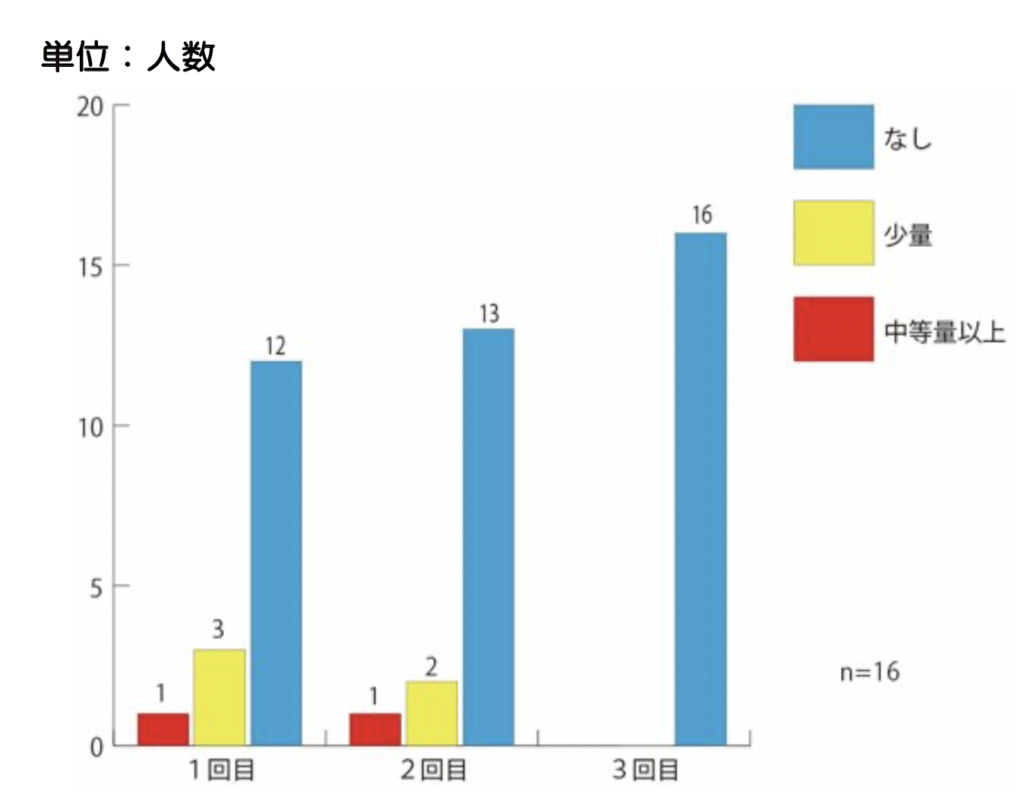
To date, rectal administration of the fecal microbial solution (SHIN-1) has been performed on 16 young children. The level of resistance was recorded based on crying behavior (Figure 4) and liquid leakage resulting from physical resistance (Figure 5). A trend of decreasing resistance with subsequent sessions is observed.
Figure 4. Level of Resistance During Administration (Crying Severity)
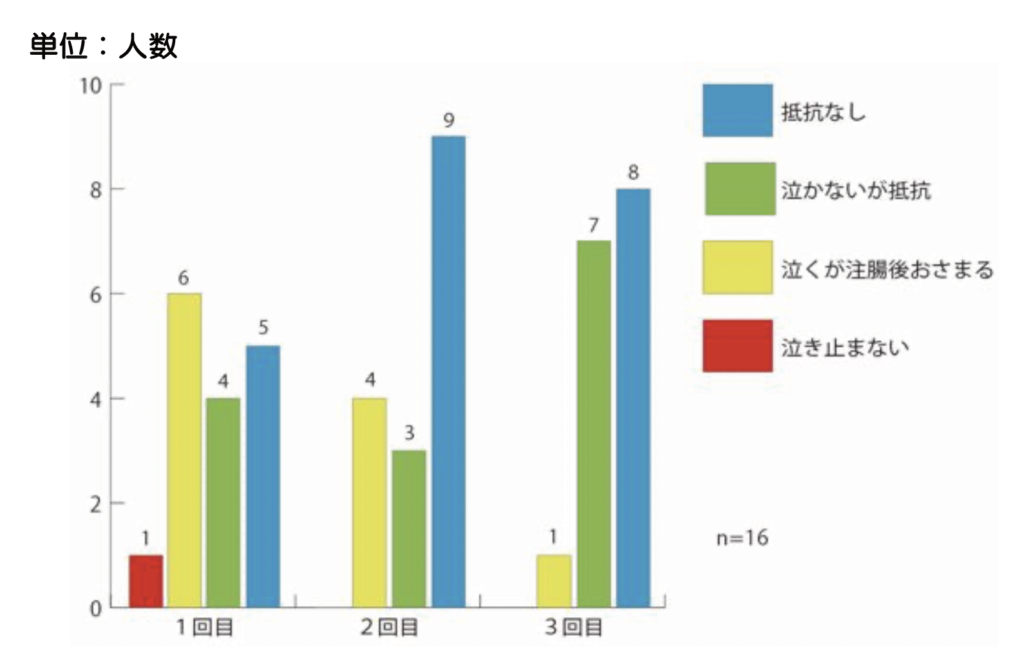
Figure 5. Level of Resistance During Administration (Leakage Due to Struggling)
4) Examinations and Evaluations
(1) Examinations Conducted at Home
The following four items are questionnaire-based evaluations completed at home:
- SRS-2 (Social Responsiveness Scale, Second Edition) (Bubble sheet format)
- PHQ-4 (Patient Health Questionnaire-4)
- GSRS (Gastrointestinal Symptom Rating Scale)
- BS Score (Record of changes in stool consistency / Bristol Stool Scale)
(2) Examinations Conducted at Medical Facilities
Gazefinder Eye-Tracking System:
This device objectively evaluates ASD characteristics by recording visual fixation and gaze patterns while the child watches a short video (approx. 2 minutes). The test merely requires looking at a screen, making it low-burden for the child. (Image credit: JVCKENWOOD Corporation)
(3) Stool Collection at Home (Mailed Samples)
16S rRNA Gene Analysis (Stool Genetic Testing): Bacterial genetic testing to analyze gut bacterial distribution.
Archival Stool Samples
(4) Online Diary
While not a formal test, parents are requested to record daily behavioral changes using an online diary (accessible via PC or smartphone).
Information to be recorded includes wake-up/bedtimes, dietary records, bowel movements, mood, etc.
Behavioral changes such as tantrums or hyperfixations/obsessions can be freely described in the open comment section.
5) Schedule Table
The implementation timeline for various evaluation items is summarized below.
If you have any questions, please contact the Clinical Research Secretariat.
Table 3. Study Schedule
.jpg)
6) Medical Care After Study Completion
FMT can continue to be administered as needed after completion of the study treatment. In such cases, the treatment will be conducted as private-pay (out-of-pocket) care until the procedure receives public health insurance coverage in the future.
5. Expected Study Period and Target Sample Size
Participant Recruitment Period: From the date of jRCT publication until the target sample size (30 participants) is reached.
Observation Period: 30 weeks from the initial FMT administration.
6. Anticipated Participant Burden
(1) Travel Expenses and Time Commitment
Due to increased visit frequency compared to routine clinical care, travel time and transportation costs may increase. (This includes travel time and expenses for the private-pay consultation prior to study entry, 6 transplantation visits, and 3 follow-up observation visits.) Additionally, completing home questionnaires (SRS-2, GSRS, PHQ-4) will take approximately 30 minutes, and recording the daily diary will take about 10 minutes. 16S rRNA gene analysis is performed before transplantation, at Week 8, and at Week 30 post-transplantation. While stool samples are collected at home using a dedicated kit and mailed, stool collection and shipping require time and effort.
(2) Out-of-Pocket Costs for Medical Care Prior to Study Entry
Costs required prior to study enrollment (excluding tax):
Consultation fee (clinical assessment, height, weight, blood pressure, body temperature, auscultation, pulse, SpO2
): Approx. 10,000 yen per visit (subject to variation based on time).
Note: Additional tests (urinalysis, blood tests, etc.) may be added if deemed necessary by the physician.
Note: No costs will be incurred for the 6 consultation/transplantation procedure visits or the 3 follow-up observation visits.
(3) Medication Use During Clinical Research Participation
Depending on the medication, participants may be requested to suspend certain drug treatments during study participation.
(4) Adverse Events
FMT is expected to be a procedure with few adverse events. Following enema administration, adverse events of fatigue and constipation were observed in 1 out of 14 children, but these were mild and transient. However, an increase in adverse events as the sample size expands cannot be ruled out.
Since April 2022, in private-pay administration of SHIN-1-containing enema solution for conditions other than ASD (approx. 50 cases), adverse events such as abdominal pain, constipation, diarrhea, and fever were observed in some cases, all of which were mild and transient.
During and after the clinical research, every effort will be made to manage safety. If a serious adverse event occurs (any unfavorable medical event regardless of causal relationship to enema administration), ensuring participant safety will be the highest priority, and prompt, appropriate medical care will be provided to ensure the child’s well-being.
Note that side effects vary among individuals and do not necessarily occur in everyone. As with any medical intervention, side effects can occur; if any unusual symptoms appear, please contact your attending physician or the consultation desk listed below.
7. Participation in this Clinical Research
Participation in this study is entirely voluntary for both you and your child. You may choose to decline participation at any time. Whatever decision you make, neither you nor your child will suffer any disadvantage. Please read the explanation document carefully, and if you are considering participation, please contact the Clinical Research Secretariat.
After thorough consideration and discussion with your family, please visit one of the participating medical institutions where a Principal Investigator is stationed (6 facilities) and decide based on your and your child’s free will.
If you agree to participate, please sign the informed consent form.
8. Withdrawal of Consent
You may withdraw your consent to participate in this study at any time after agreeing. Declining or withdrawing will not result in any disadvantage to future medical care. If you wish to withdraw consent, please do not hesitate to inform your attending physician.
9. Disclosure of Information Regarding the Research
An outline of the study purpose and methods is registered and publicly disclosed on the database operated by the Ministry of Health, Labour and Welfare (jRCT: Japan Registry of Clinical Trials, URL: https://jrct.niph.go.jp/ ) prior to study initiation.
Study progress and results will also be accessible. Personal information will be anonymized upon publication to prevent individual identification.
10. Financial Considerations
1) The enema solution is provided free of charge by Symbiosis Inc. Therefore, there will be no additional financial burden on the legally acceptable representatives (parents/guardians) of children receiving FMT.
2) Consultations prior to confirmation of study participation may incur out-of-pocket costs of approximately 10,000 to 20,000 yen (consultation fees, etc.).
3) No compensation or honorarium will be paid to participants.
4) Please note that transportation expenses and accommodation costs (if traveling from a distance) must be borne by the participant/guardian.
11. Compensation for Health Impairment
This study will be conducted with the utmost care; however, in the unlikely event that a health impairment occurs in connection with this research, our institution will promptly provide the best possible medical treatment. Compensation for any health impairment will be provided in accordance with the terms and conditions of liability insurance (Clinical Research Insurance).
12. Participating Medical Institutions, Attending Physicians, Titles, and Contact Information
【Lead Principal Investigator】 (Overall Lead Researcher)
https://fmt-japan.org/en/post/10945
13. Verification via Clinical Research Plan Publication System
This trial is registered and accessible via the jRCT (Japan Registry of Clinical Trials):
https://jrct.niph.go.jp/latest-detail/jRCTs031230041