

“Feel Free to Try Anything— I Will Take the Responsibility”
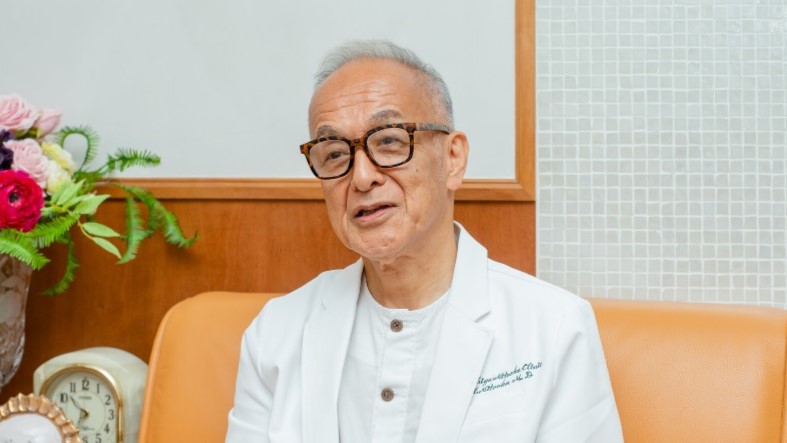
These words, spoken to him by his mentor at Suma Red Cross Hospital during his residency, became the foundation for Dr. Hideki Mitooka’s subsequent career as an endoscopist spanning more than 40 years.
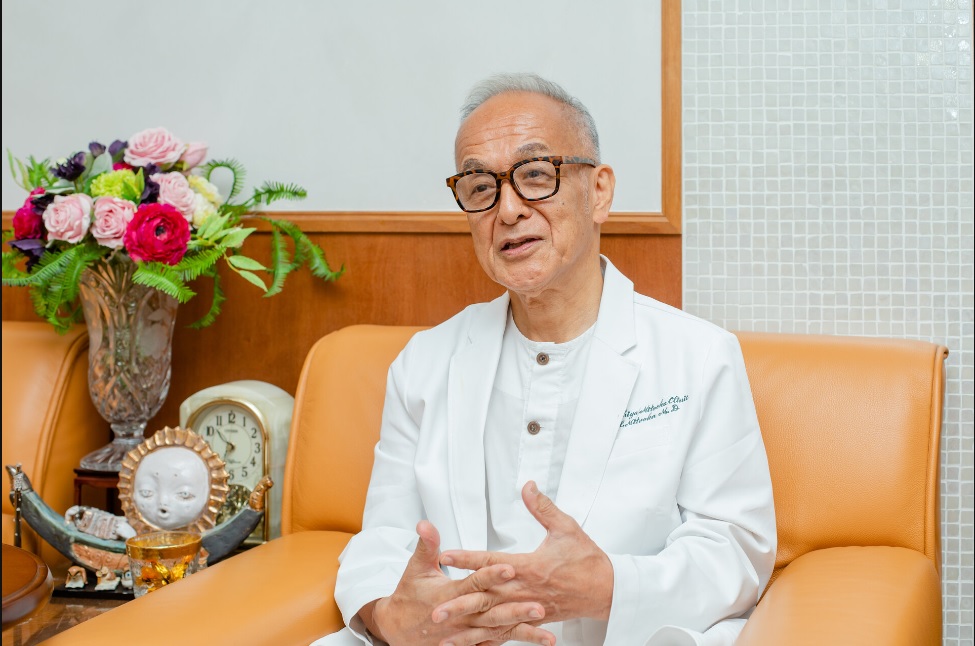
While involved in the development of world-class endoscopes and selected as one of the “Best Doctors in Japan™” for 20 consecutive years, Dr. Mitooka has consistently pursued “patient-centered medicine.”
During his time as a hospital physician, he spent his days treating numerous patients, kept busy with endoscopic examinations that lasted from morning until late at night.
However, amid this routine, he began to feel uneasy as he realized that “patient-centered care” was gradually turning into “care that was merely going through the motions.”
After wrestling with this conflict, he chose the path of opening an endoscopy clinic specializing in private practice—a rarity even nationwide.
Today, drawing on his extensive experience as an endoscopist, he actively utilizes NanoGAS® water as part of his efforts to prevent colorectal cancer and reduce the financial burden on patients.
Why did Dr. Mitooka choose the path of private practice? Why does he continue to take on the challenge of new medical technologies even now?
And what is the medical care that patients truly need?
We take a closer look at Dr. Hideki Mitooka’s career and his medical philosophy.
I Want to Continue Providing Patient-Centered Care—The Origin of Opening a Private Practice
Dr. Mitooka’s decision to open an endoscopy clinic specializing in private care was driven by a strong desire to “continue providing patient-centered care.”
The Discomfort of Shifting from “Patient-Centered Care” to “Routine Care”
During his time as a staff physician, Dr. Mitooka received endoscopy appointments from many patients and spent his days rushing from morning to night to see them all.
He was doing his utmost, driven solely by a desire to meet his patients’ expectations, but one day he suddenly realized that his medical practice was becoming “medicine that just gets things done” rather than “medicine that truly cares for patients.”
Endoscopy is a medical procedure in which it is extremely important to devote sufficient time to each individual case and observe carefully. However, within the framework of insurance-based medical care, the reality is that a medical institution cannot survive unless it treats a large number of patients.
“Unfortunately, in the world of medicine, there is an aspect where quality and quantity are inversely proportional. I began to feel that there were limits to pursuing my ideal form of medical care.”
There was an incident that solidified this feeling.
The Day I Was Told, “The Nurse Can’t Keep Up”
During my time at Kobe Kaisei Hospital, amid days filled with endoscopic procedures that went on from morning until late at night, the Chief Nursing Officer told me one day:
“The nurses can’t keep up.”
Those words came as a huge shock to Dr. Mitooka.
He had believed he was doing everything in his power for his patients.
However, at the same time, the burden on the staff on the front lines had become far greater than he could have imagined.
“When I heard those words, I keenly realized that I had been pushing not only myself but also the staff around me too hard.”
At the same time, he came to recognize once again the limitations of continuing to provide ideal medical care to each individual while increasing the number of patients within the framework of insurance-based medical care.
This incident became a major turning point that later led to his decision to open his own private practice offering self-pay services.
The Option of Private Medical Care
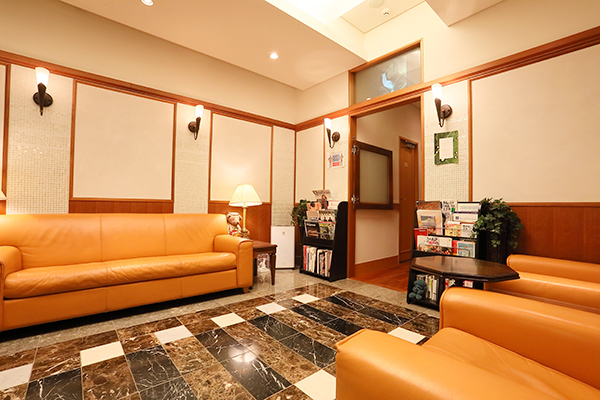
In 2006, Dr. Mitooka opened an endoscopy clinic specializing in private care—a rarity even on a national scale.
After opening the clinic, he faced financial uncertainties and difficulties. However, he says he has never once thought, “I should have gone back to being a hospital physician.”
The reason is clear.
“The sense of fulfillment I felt from practicing the kind of medicine I envisioned was far greater.”
Taking sufficient time with each and every patient.
Providing uncompromising diagnosis and treatment.
Engaging sincerely with patients.
By opening his own practice, Dr. Mitooka was able to uphold the core principles he has always valued most as a physician.
“Do whatever you want”—How Meeting My Mentor Set the Course for My Career as an Endoscopist
Dr. Mitooka’s roots as an endoscopist lie at Suma Red Cross Hospital, where he worked during his residency.
The influence of his mentor, Dr. Fumihiko Tamada, whom he met there, shaped the course of his medical career for more than 40 years to come.
In the medical field at that time, an environment where young doctors could freely take on new challenges was by no means the norm.
However, Dr. Tamada is said to have granted young doctors an astonishingly high degree of autonomy.
Looking back on those days, Dr. Mitooka cites the following words as the ones that left the deepest impression on him:
“Do whatever you want. I’ll take responsibility.”
For a young doctor, there were no words more reassuring than these.
It was precisely because he was in an environment where he could take on challenges without fear of failure that he was able to gain extensive experience and develop the ability to think and make decisions for himself.
“Looking back, I believe this free and open training environment was the single most fundamental factor that determined the direction of my career in endoscopy, which has continued for more than 40 years since then.”
Endoscopy is a field that is constantly evolving.
With new technologies, new equipment, and new treatment methods emerging one after another, simply maintaining the status quo is not enough to provide the best possible care to patients.
Behind Dr. Mitooka’s continued pursuit of new technologies and equipment development lies the “spirit of taking on challenges freely”—a mindset deeply ingrained in him from the guidance he received from his mentor in his youth.
To Continue Growing as a Person
There is another person who has had a profound influence on my way of life—not only as a doctor, but as a human being.
That person is my Aikido instructor, Tatsuru Uchida.
Dr. Mitooka has practiced Aikido for over a decade and holds a third-dan rank.
He says that practicing outside the medical setting provides him with valuable time to reflect on himself and bring his mind and body into balance.
Aikido is not a martial art focused on winning or losing.
Rather than defeating an opponent, it is a “martial art that aims to bring oneself into balance and achieve maturity as a human being,” and is also known as “moving Zen.”
For Dr. Mitooka, who has spent many years in the highly competitive environment of the medical field, this philosophy marked a major turning point.
“I intend to continue practicing this for as long as possible—for the rest of my life—as a place where I can continually learn what mental and physical health truly mean, and how one should live as a human being.”
Growing as a doctor.
…And growing as a human being.
Dr. Mitooka continues to pursue both of these goals to this day.
Toward the Development of the World’s Most Advanced Endoscopes—A Challenge with Fujifilm
Dr. Mitooka’s work extends beyond clinical practice and research.
For over 30 years, as an endoscope development advisor for Fujifilm, he has continued to propose to the manufacturer solutions to challenges and areas for improvement that only a clinician on the front lines can identify.
The Untold Story Behind the Development of the “EC-450RD5,” Born on the Job Site
Among these, the development of the “EC-450RD5”—a scope designed specifically for colon treatment—was particularly memorable.
At the time of development, Dr. Mitooka proposed the idea of combining the ease of insertion of a colonoscope with the excellent maneuverability of a gastroscope.
“If we had a colonoscope that allowed for more precise angular manipulation, we could perform safer and more precise treatments.”
This idea was born from the challenges he had observed firsthand in the clinical setting.
After numerous discussions with the manufacturer’s development team and repeated prototyping and refinements, the completed EC-450RD5 went on to play a major role in subsequent colonoscopic treatments.
It enabled a delicate approach to lesions and became an indispensable tool supporting advanced endoscopic treatments such as EMR and ESD.
“There are still some development projects we haven’t given up on”
However, for Dr. Mitooka, this development story is not just a success story.
While the EC-450RD5 was highly acclaimed, production of that model ceased about 10 years ago.
Dr. Mitooka continues to engage in dialogue with Fujifilm, hoping to see a successor model that carries on the philosophy of that discontinued model.
“I’m still asking them to develop a successor model,”
However, the regulatory framework and development environment surrounding medical devices have changed significantly, making it difficult to carry out prototyping and improvements at the same pace as before.
As a result, this vision has yet to be realized.
“Perhaps this may never come to fruition.”
He admits there are times when he feels this way.
Yet he refuses to give up on the challenge.
For Dr. Mitooka, continuing to think, “It would be great if there were an endoscope like this” for the sake of his patients remains, to this day, an unwavering life’s work—one he absolutely cannot compromise on.
Clinical practice, research, education, and endoscopic device development.
What they all have in common is the desire to provide better medical care to patients.
To this day, Dr. Mitooka continues to take on the challenge of shaping the future of endoscopic medicine.
What Matters More Than “Best Doctors”—Dr. Mitooka’s Thoughts on What Makes a Good Doctor
Dr. Mitooka has been selected for “Best Doctors in Japan™,” an international physician evaluation program originating in the United States, for 20 consecutive years.
This program selects physicians based on peer evaluations, and is characterized by the fact that physicians are evaluated from the perspective of “doctors whom I would entrust with my own or my family’s care.”
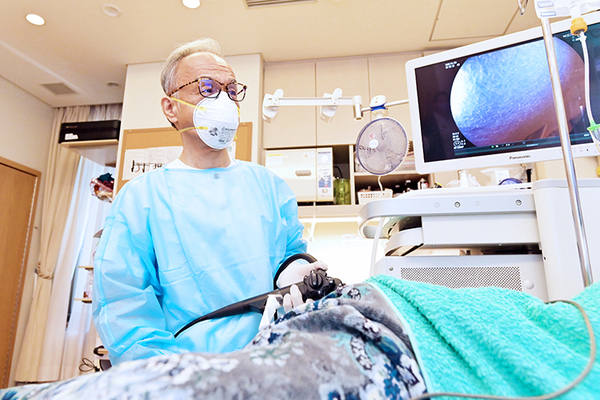
Being selected for 20 consecutive years is extremely rare and serves as a testament to the high level of trust he has built not only within Japan but also within the international medical community.
This achievement is underpinned by Dr. Mitooka’s extensive international experience, including his tenure as a visiting professor at the State University of Rio Grande do Sul in Brazil and his numerous lectures and live demonstrations around the world, including the United States, Europe, and South America.
However, Dr. Mitooka himself says there are things more important than awards and titles.
Think about what you would do if it were your own family
Dr. Mitooka believes that being a good doctor requires more than just advanced skills and extensive knowledge.
“A doctor who can treat the patient in front of them as if they were a member of their own family.”
He says that is what matters most.
What if the patient were my own parent?
What if they were my spouse?
What if they were my child?
How would I explain things to them?
What tests or treatments would I recommend?
He believes that maintaining this perspective is what leads to becoming a doctor whom patients trust.
In fact, ever since opening his private practice, Dr. Mitooka has placed the utmost importance on taking the time to engage with each and every patient.
This also reflects his approach of treating patients not merely as medical cases, but as individuals.
“A doctor can never deceive a patient.”
Throughout his more than 40-year career as a doctor, Dr. Mitooka has come to believe one thing with absolute certainty.
That is, “A doctor can never deceive a patient.”
In medicine, there are things that remain unknown no matter how much experience one gains.
Nor is it possible to predict future outcomes with 100% accuracy.
That is precisely why, he says, it takes courage to honestly admit when you don’t know something or when something is difficult.
“Patients pay more attention to a doctor’s words, attitude, facial expressions, and sincerity than we realize.”
Knowledge and technical skills are, of course, important.
But even more important is remaining sincere toward patients.
It is this consistent effort that builds trust and leads to quality medical care.
Even after being selected as a “Best Doctor” for 20 consecutive years, Dr. Mitooka is not pursuing a title.
He continues to engage sincerely with each and every patient.
That attitude may be the very reason he has enjoyed the long-standing support of so many patients and fellow doctors.
We Want to Reduce Colon Cancer—Why We Continue to Use NanoGAS® Water
Throughout his more than 40 years of clinical practice, Dr. Mitooka has been pursuing a single question.
“How can we reduce the number of people who die from colorectal cancer, even by just one?”
In his ongoing search for the answer, he has focused not only on improving the accuracy of screening tests but also on finding ways to make it easier for patients to undergo screening.
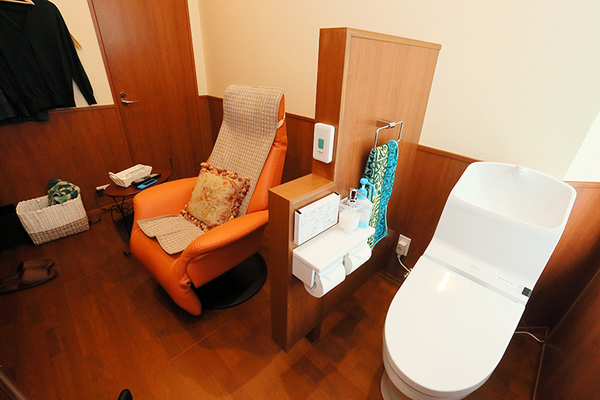
Colon cancer is one of the few cancers that can be prevented
Currently, colorectal cancer is one of the most serious diseases in Japan.
However, Dr. Mitooka says that colorectal cancer is by no means an unavoidable disease.
If polyps—which can develop into cancer—are detected and removed through a colonoscopy, colorectal cancer itself can be prevented.
Furthermore, even if cancer is found, a complete cure through endoscopic treatment is highly likely if it is detected at an early stage.
“To avoid losing your life to colorectal cancer, it is most important to undergo a colonoscopy before symptoms appear.”
That is precisely why Dr. Mitooka has spent many years not only improving the accuracy of the procedure but also devising ways to make it more accessible to patients.
The most difficult part for the patient was the preparation before the test.
Thanks to advances in sedatives, colonoscopies themselves are now less painful than they used to be.
However, the reason many patients hesitate to undergo the procedure lies elsewhere.
That reason is the need to drink a bowel preparation solution before the exam.
Quite a few patients find the prospect of drinking a large volume of this solution burdensome and end up avoiding the procedure.
Dr. Mitooka himself has heard this concern from many patients over the years.
“There are a great many patients who find the pre-procedure preparation more difficult than the examination itself.”
Is there any way to alleviate this issue, even slightly?
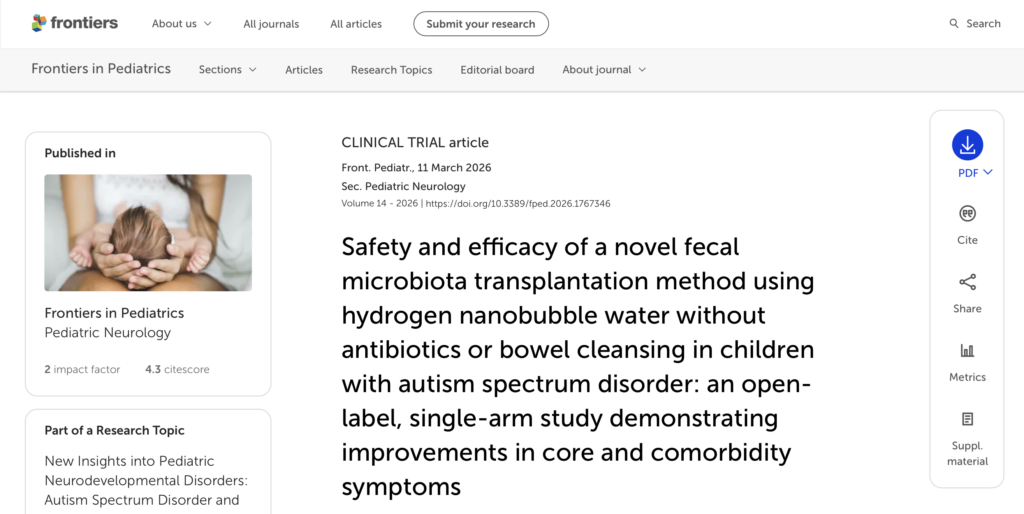
It is with this in mind that NanoGAS® water continues to be utilized. NanoGAS® water is one of the technologies also used in fecal microbiota transplantation (FMT). (https://fmt.sym-biosis.co.jp/en/about/our-fmt-transplanation)
NanoGAS® Water May Lower the Barriers to Colonoscopy
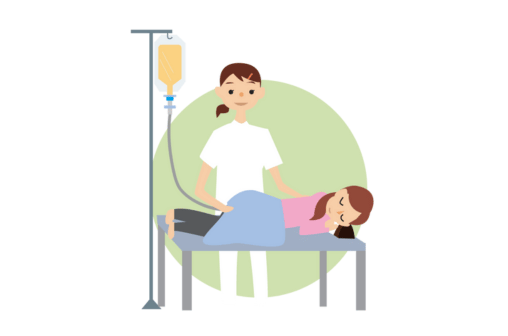
Dr. Mitooka uses NanoGAS® water as the solvent for his bowel preparation solution.
This is because the cleansing effect of the nanobubbles offers the advantage of completing the preparation in less time and with a smaller volume of fluid.
Feedback from actual patients reinforced the effectiveness of this approach.
“I had to drink less than before, and it was really easy. The physical strain felt completely different.”
How can we ensure patients undergo the procedure with minimal discomfort without compromising the quality of the examination?
For Dr. Mitooka, who has been tackling this challenge for many years, the change that patients actually experienced was the greatest source of encouragement.
If the burden of pre-procedure preparation is reduced, more people will feel inclined to say, “I’ll get screened again.” As the number of people undergoing screening increases, this will lead to earlier detection and prevention of colorectal cancer.
“I believe that if the preparation process becomes easier, more people will undergo colonoscopies, which in turn will help reduce the number of people who die from colon cancer.”
NanoGAS® water is not an end in itself, but a means to reduce the number of people who lose their lives to colon cancer—even by just one person.
One of Dr. Mitooka’s ideals for healthcare is entrusted to this water filled with tiny bubbles.
A Message to Young Doctors—Continuous Learning Drives Progress in Medicine
For over 40 years, Dr. Mitooka has been at the forefront of endoscopic medicine.
Based on that experience, there is one thing he most wants to convey to young doctors.
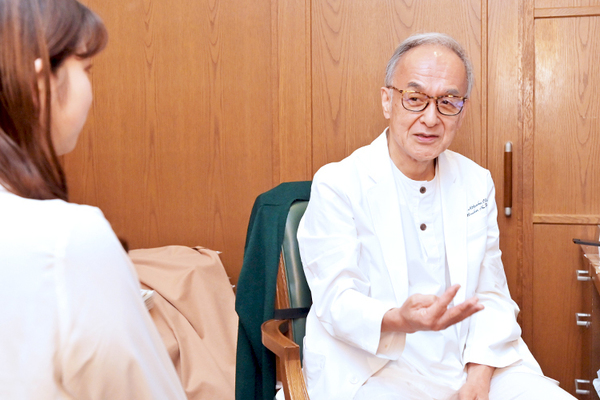
Conferences where “passion” takes precedence over titles are the most interesting
Since his youth, Dr. Mitooka has participated in numerous academic conferences and study groups both in Japan and abroad.
He notes that it is not only large-scale, prestigious conferences that truly inspire him.
Rather,
he believes that true value lies in gatherings where people come together with a genuine passion to
“provide better medical care”
and
“learn new things.”
“I believe it’s not the size of the conference, but the passion of the participants that determines its value.”
An environment where presenters and attendees are close together and can freely exchange ideas.
A place where new ideas and challenges are born.
He feels that such learning environments are the driving force that propels medical care forward.
Healthcare is constantly changing.
In the world of medicine, it’s not uncommon for what was considered common knowledge yesterday to change today.
New diagnostic technologies.
New treatments.
New ways of thinking.
These are constantly emerging.
That is precisely why Dr. Mitooka says that the most important thing for a doctor is a commitment to lifelong learning.
“It’s important to always keep your eyes and ears open.”
Academic conferences and research meetings aren’t just places to gain knowledge.
They’re also places to reexamine your own preconceptions and encounter new possibilities.
“I didn’t realize this way of thinking existed.”
“Is this really a possibility?”
Bringing back even a single such discovery leads to the next advancement in medical care.
Only doctors who continue to learn can pioneer new medical practices.
Even now, after more than 40 years in the medical field, Dr. Mitooka still enjoys learning about new technologies and approaches.
That hasn’t changed since his younger days.
In fact, he believes that as long as medicine continues to advance, he must continue to learn himself.
“As long as I never stop learning, my growth as a healthcare professional will never stop.”
As an endoscopist.
As a developer.
As a person.
This attitude of constantly taking on new challenges and seeking knowledge is the driving force that has sustained Dr. Hideki Mitooka.
An academic conference bringing together the latest findings in gut microbiota medicine—at which Dr. Mitooka will also be speaking—will be held this fall.
Announcement of the 10th Annual Scientific Conference of the Clinical Research Society for Gut Microbiota Transplantation
On Sunday, September 27, 2026, the 10th Annual Academic Conference of the Clinical Research Society for Gut Microbiota Transplantation will be held.
At this conference, participants will share the latest findings in gut microbiota research—including NanoGAS®-FMT for autism spectrum disorder (ASD)—as well as practical case studies from clinical settings.
We invite healthcare professionals interested in gut microbiota medicine and preventive medicine to join us for this learning opportunity, which puts into practice the principle of “the importance of always staying attuned to new developments,” as shared by Dr. Hideki Mitooka.
■ Date: Sunday, September 27, 2026
■ Venue: Rihga Royal Hotel Osaka (with simultaneous online streaming)
■ Organizer: Clinical Research Society for Gut Microbiota Transplantation (Public Interest Incorporated Foundation)
■ For details and registration, please visithere
Related Articles
▶︎This is a list of hospitals where you can receive a gut microbiota transplant, as well as facilities where you can consult about transplants.
▶︎Here is an introduction to NanoGAS®-FMT, the product we offer.