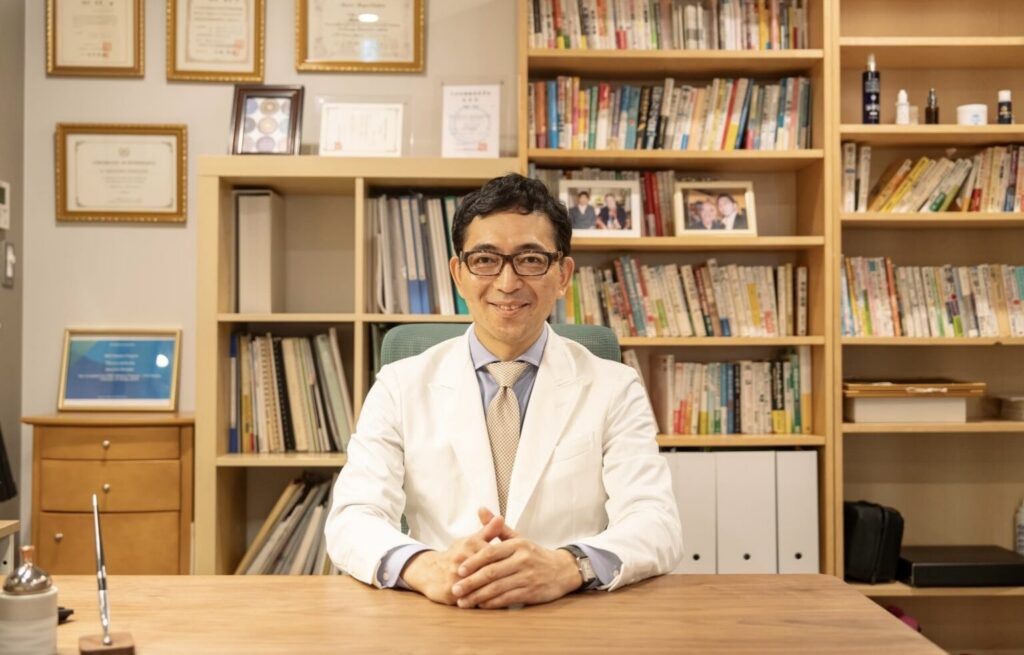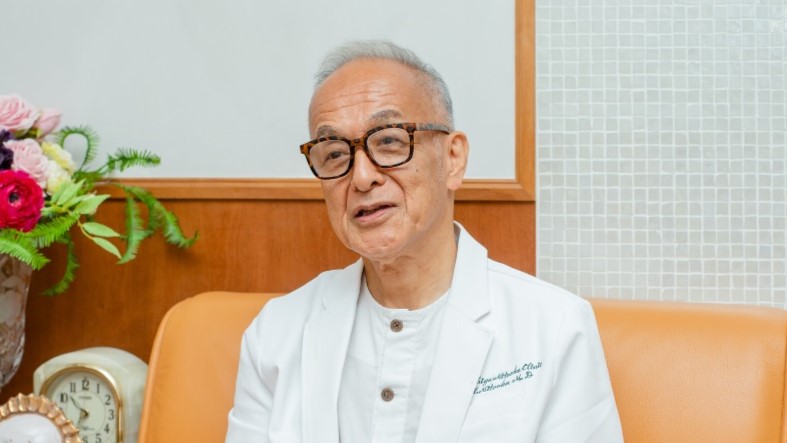


In this issue, we introduce Makoto Shimizu, Senior Research Scientist at Symbiosis Laboratories, who is in charge of basic research for the 3rd Annual Meeting.
As a clinical laboratory technician, I have been involved with the human body for many years, focusing on bacteria. Because I do not have the opportunity to talk directly with patients, I enjoy talking with bacteria and have come to love the non-pathogenic “other” bacteria and ponder the possibility that intestinal bacteria may be contributing to health.
Master, you are very serious, unlike the groove of the Symbiosis Institute. But “enjoying conversation with bacteria” is pretty serious.
Bacteria change generations in less than 20 minutes. The speed of their evolution is an order of magnitude faster than that of humans, and thanks to them, humans are somehow able to cope with changes in the environment that cannot be adapted to on a genetic level.
Now, through the development of the intestinal flora transplantation bacteria solution, I am striving every day to help clinical doctors.
Here are some abstracts by Researcher Shimizu.
Toward the world’s highest standards in clinical application
The Human Genome Project was completed in 2003, the 50th anniversary of the discovery of the double helix structure of DNA in 1953.
At the time of its inception, the Human Genome Project was said to be “unplanned,” and it was an enviable privilege for only a limited number of privileged researchers to be involved in the project.
Many of you may remember the NHK special broadcast of “The Amazing Microcosm of the Human Body” 30 years ago. At the time, the number of human cells was said to be 70 trillion, but it was reduced to 37 trillion, or about half of that number.
At that time, I was testing for insect eggs in stools at the National Osaka Hospital (now the National Hospital Organization Osaka Medical Center). At that time, stool tests for bacteria were mainly used to detect diarrhea-causing bacteria and worms in the body, and antibiotics were prescribed in the early stages, known as the first generation. I spent day after day with stools, and most of the bacteria that came into my microscopic view were not for detection, but for the familiar diarrhea-causing bacteria that I had to test for every time. One day, I suddenly realized that I was beginning to love and feel sorry for the small bacteria of various shapes and sizes that were not subject to reporting, and that seemed to be trembling and even frightened, something I had almost completely ignored until then.
Too many to be treated as just major members of the excrement! Too many different members for every person! Feeling this way, I started by comparing the stools of healthy people with those of patients. The cocci and bacilli were stained purple or pink by Gram staining. The variety of species and the differences in the constituent members were obvious. With the help of the staff, I was able to do the research that I was not very good at, and was astonished to learn that stools were used in China in the 4th century for treatment.
The method commonly used for stool transplants since the 20th century is really simple: dissolve stool in saline solution and place the filtered bacterial solution (yellow soup) into the intestine. However, when it came time to conduct a stool transplant experiment, it was difficult to find a collaborator due to psychological resistance to putting someone else’s stool into one’s body.
Therefore, we first tried a transplant in which a bacterial solution purified from the donor’s own stool was put back into the donor’s body using the intestinal method. The results were not at all effective or pleasant, and in fact, some people even became ill.
After trying various solvents, the participants were finally able to experience the best results with the current(SECRET) The result was that the participants were able to feel the best effect of the current solvent. The (Confidential) was purified in a special (Secret) We have established a donor bank for the production of the bacterial solution, and have developed a series of procedures for the purification of the bacterial solution under the world’s highest level of safety, so that doctors can use the solution with peace of mind.
We have also established a dedicated donor bank to secure stools for the production of bacterial solution, and have developed a series of procedures for the purification of bacterial solution that can be used by doctors with confidence under the world’s highest level of safety.
We at Symbiosis Laboratories are pioneers in stool transplantation and are always conscious of the fact that we are a group of engineers who manufacture products. Four years ago, we started a project to achieve the “world’s highest standard in clinical application” so that the clinical doctors who use our products will appreciate them and, in turn, they will be useful to as many patients as possible. If the human body is a microcosm, then cells and bacteria are stardust scattered throughout the universe. The project was code-named the “Stardust Project.
At the general meeting, we will introduce our engineers’ thoughts on the transplantation solutions we have developed for clinical doctors and the bacteria that have been entrusted to them.
So many secrets yiiiiiiiiiiiiiiiiiiiiiiiiiiiiiiiiiiiiiiiiiiiiiiiiiiiiiiiiiiiiiiiiiiiiiiiii!
Dirty tricks!
So, everyone who wants to know the secret, please come to the general meeting.
This is one of the few opportunities for Shimizu to appear in public.
We are waiting for you!