Intestinal Flora Transplantation Clinician Interview with Dr. Man “Thoughts on Intestinal Bacteria (Flora) Transplantation”
At Symbiosis Institute, we are mainly engaged in research and development of transplantation of intestinal bacteria (plexus) (intestinal flora transplantation) under the theme of “coexistence and co-prosperity with microorganisms”. The actual transplants are performed on patients by clinicians who belong to the “Intestinal Flora Transplantation Clinical Study Group. Today, we bring you an interview with…
At Symbiosis Institute, we are mainly engaged in research and development of transplantation of intestinal bacteria (plexus) (intestinal flora transplantation) under the theme of “coexistence and co-prosperity with microorganisms”.
The actual transplants are performed on patients by clinicians who belong to the “Intestinal Flora Transplantation Clinical Study Group.
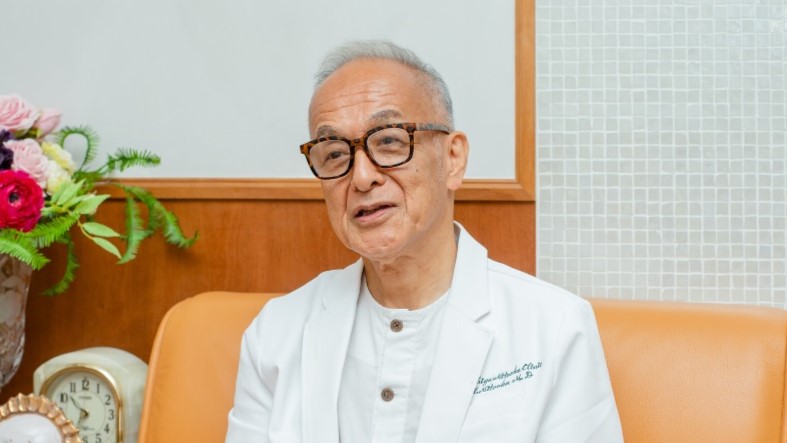
Today, we bring you an interview with Dr. Noriaki Man, Director of Yorozu Clinic, who is also the Executive Director of the Research Association, among the ” affiliated medical institutions where intestinal bacteria (plexus) transplants are available”.
*What is referred to in the text as “Shimizu-style intestinal flora transplantation” is a transplantation using our method.
(You can also watch the YouTube video at the bottom of this article.)
How did the transplantation of intestinal bacteria (plexus) come to our attention?
Every day, we consult with many patients about their problems, intractable diseases, etc. There are many standard treatments that can only be addressed by coping therapies.
Examples include intractable atopy, depression, and ulcerative colitis that require the use of steroids, and I often wondered, “Can’t these really be cured?” I often wondered.
After doing a lot of research, I found that the cause of these symptoms had a deep relationship with intestinal balance, and this is when I began to pay attention to it.
However, it has always been a challenge for me to find a way to treat this in our clinic.
What are your thoughts on the transplantation of intestinal bacteria (flora)?
This was the first time I learned about Shimizu-style intestinal flora transplantation, and when I heard about “stool transplantation,” I was honestly surprised and astonished.
I have found that one of the causes of all diseases is intestinal bacteria, and I have wondered about diet therapy and the like.
Of course, diet is important, but I sometimes wondered if the stomach acid would break down the necessary nutrients in the food taken by mouth.
In fact, transplantation of intestinal bacteria (plexus) is already being done in Europe and the United States, and the method of directly inserting healthy intestinal bacteria into the intestines has actually proven to be very efficient and reasonable.
What did you think when you learned about the transplantation methods recommended by the study group?
I was very surprised to hear that the Shimizu-style intestinal flora transplantation already has an intestinal flora bank.
It was quite revolutionary and astonishing to hear that a donor suitable for each patient’s symptoms is selected for transplantation, and that the intestinal flora is examined and stored.
A few years ago, I learned that the Massachusetts Institute of Technology in the U.S. already has a stool bank where stools are collected from quality donors, stored, and administered to those who need it.
I always thought, “We need to do this in Japan, too,” but it is not something that can be done on a whim.
There is no way that an ordinary clinician can know the balance of intestinal bacteria, or indeed what is good and what is bad.
In addition, a clinical research project at a Japanese university has been conducting transplantation of intestinal bacteria (plexus), but the donors are limited to relatives within the second degree of consanguinity. I wondered if the transplantation would really improve the patient’s condition.
I heard that a person who actually had ulcerative colitis was transplanted with the Shimizu method and improved after several times and several donors’ bacteria were transplanted.
It means that among several donors, there was a super donor.
What are the future possibilities for the transplantation of intestinal bacteria (flora)?
It is said that there is about 1.5 kilograms or one puppy in a human intestine these days, and if that were completely changed by the transplantation of intestinal bacteria (plexus), I believe that the person’s constitution would be uprooted and improved.
For example, if the transplantation boosts the immune system and suppresses excessive immunity or produces substances necessary for the body, I believe that it could be used to treat (completely cure) the underlying disease, rather than as a coping therapy as I mentioned at the beginning of this article.
The act of replacing intestinal bacteria must be done with caution.
On the other hand, I believe that it is a very powerful therapy that can cure the basic “key” of any disease.
What are the future activities of the study group?
We will focus on raising awareness among the general public and medical professionals.
Provide proper evidence and proof.
I believe that if we can ensure that this process is carried out one by one, we will be able to create a large movement.
With high expectations, we will do our best with the help of all of you.
For a transplant consultation at Yorozu Clinic (Tottori Prefecture), please visit the Yorozu Clinic website at