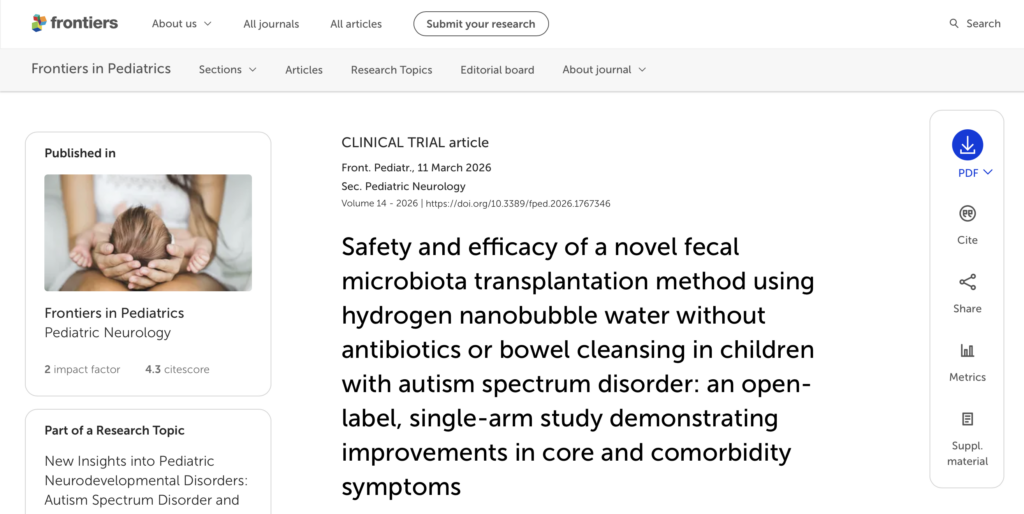



The transplantation of intestinal bacteria (plexus) at our institute is basically a multiple transplantation process.
Some patients have had as few as three transplants, some have had as many as 20, and the most have had over 50 transplants.
In many cases, patients continue to have transplants after remission as a source of relief.
The number of transplants required varies from person to person, as it depends on the type of disease, condition, history of disease, as well as age and lifestyle.
Unlike other organ transplants, it is not possible to say “yes, it’s over” after transplantation.
As mentioned in the previous article, while the risk is considered low because it is not a transplant of human tissue itself, it takes time for the useful substances produced by the intestinal bacteria to return the body’s function itself in the right direction.
You might think that killing all your own intestinal bacteria and putting in a new intestinal bacteria transplant solution would work faster.
If there is no “immunity” it is faster.
This is also what I said in my last article, basically the transplanted bacteria cannot settle in the intestinal tract without the permission of their own immune system (IgA antibodies).
Although it sounds like a good thing to have the body learn a new intestinal flora, it actually increases the risk compared to having it not settle and be expelled directly from the body.
What can happen due to the high “rememberability” of the transplanted fungal solution

For example, if one’s bookshelf is lined with books that deny one’s identity, one feels unsettled.
I would like to go back to the books I used to read, I may end up reading more of the same books than before.
This is not good when this happens in a gut flora where diversity is a good thing. We call this phenomenon “rebounding”.
Your own intestinal flora may resist.
The homeostasis (homeostasis) of human beings may recognize the new intestinal flora as foreign.
(For more information on homeostasis, see also: ” Considering at what age is the best age to receive a gut flora transplant?)
When the newly introduced intestinal flora balance and the intestinal flora balance you have repel each other,
you may feel as if your symptoms have temporarily worsened.
This “rebound” is more likely to occur in those who have a well-functioning immune system.
In other words, the immune system is in a high state of health for roughly 10 years after the thymus gland, the school of immunity, finishes its education at about 17-18 years of age. It does not easily change to a new flora balance.
By disease, inflammatory bowel diseases such as “atopy/allergy,” “ulcerative colitis,” and “Crohn’s disease,” in which the immune system is in a state of excess, are also prone to rebound.
Transplantation method that causes as little rebound as possible
Rebounding should not happen, of course.
Rebounding is your own immune system trying to protect your body from sudden changes.
Therefore, the Institute adopts the method of “having one’s body gradually learn a new intestinal flora balance without rebounding as much as possible.
In a nutshell, we are talking about “gradually increasing the concentration”.
This
– How much to increase the concentration for the second, third and subsequent times
– How much to increase the quantity
– How much to increase the frequency
is difficult to proportion.
Even with the same disease, it varies from person to person, and we decide together with the attending physician on the course of the disease.
The other caution besides rebound is the risk of “bad bacteria establishment”.
Accidentally establishing a virus or infection-causing bacteria can be difficult.
Donor stools used by our institute are administered and managed by Japanbiome. Detailed test details and other information can be found here.
We will continue our research with the aim of reducing the burden on patients as much as possible and maximizing the effects of transplantation. For those of you who have undergone or are about to undergo transplantation, please share your progress before and after transplantation in as much detail as possible with your attending physicians.