

Mr. K has suffered from chronic sinusitis, chronic prostatitis, and allergic rhinitis for many years.
When he decided to undergo an intestinal flora transplant, he found it difficult to even stay awake.
We asked Mr. K about what happened before and after the transplant.
[Profile]
60s male
Mr. K
Diseases: chronic sinusitis, chronic prostatitis, allergic rhinitis
Number of transplants:
February 13 – March 27, 2019 Course of 6 transplants
March 22 – April 5, 2021 3 additional transplants
Attending physician in charge of transplantation: With Health Futakotamagawa Medical Clinic
(Click here for Futakotamagawa Clinic article list)
Post-transplantation diagnosis: clear improvement of symptoms (and other transplantation objectives achieved)
Q1. WHAT SYMPTOMS DID YOU SUFFER FROM BEFORE RECEIVING THE INTESTINAL FLORA TRANSPLANT?
I was suffering from three conditions: chronic sinusitis, chronic prostatitis, and allergic rhinitis. In addition to the swelling and pain caused by sinusitis and prostatitis, I had a long history of severe discomfort, including pain in my left knee and stiff shoulders and back muscles.
The symptoms of chronic sinusitis were particularly painful, and as of January 2019 (when I was 59 years old), just prior to receiving the treatment, I could not stay awake and would fall back asleep due to the discomfort caused by chronic sinusitis within 30 minutes of waking up in the morning. The symptoms of chronic sinusitis worsened extremely in my late 50s, and I recall that the remote cause of this situation was that I had needlessly used many antibiotics as a remedy for colds during my childhood (around 3 to 6 years old) and adolescence (25 to 28 years old), and that I had disturbed my intestinal flora to the point of being unable to breathe. This is the reason why the intestinal flora was disturbed.
I realized through physical sensation that antibiotics were actually not a good idea, and after the age of 28, I gave up all coping drugs, including antibiotics. However, once I had disturbed my intestinal flora to the ultimate extent, it was serious, and the situation before the intestinal flora transplant was that I was able to get by until my mid-50s without getting into a serious condition, simply because of the physical exertion of my youth, without the problem being resolved.
It is said that when the intestinal flora is disturbed to the ultimate level, mold can develop and spread through lymph fluid to the prostate gland and other parts of the body such as the sinuses, triggering strong inflammation, and it is easy to imagine that such a condition would have been reached.

Q2. WHAT WERE THE DECIDING FACTORS IN YOUR DECISION TO HAVE A TRANSPLANT?
Plants produce fine, healthy fruit when the bacterial flora in the soil is active and free from pest damage, and animals likewise remain healthy and resistant to viruses when their gut flora is normal.” As a lover of biology, this theme was originally intuitively familiar to me. I had been interested since high school in the relationship between the folds of the colon’s inner wall and the intestinal flora that live there and the relationship between the root hairs of plants and the soil bacteria that live there, so when I saw “Soil and Internal Organs” (Tsukiji Shokan: David Montgomery) in a newspaper review, I immediately purchased this book in summer 2017 I immediately purchased the book in the summer of 2017.
Lucky for me, I was not able to read the book immediately after purchase and it was left in a pile of reading until New Year’s Day 2019, a year and a half later. Had I read the book in the summer of 2017 immediately after purchase, I would have given up without being able to find the “Intestinal Flora Transplantation Clinical Study Group” (established in November 2017), which is implementing the intestinal flora restoration therapy described in this book in Japan.
After reading this book on New Year’s Day 2019, I immediately contacted Futakotamagawa Medical Clinic in Tokyo, and during my first visit in late January, I was told at the clinic, “This therapy is expensive, so please consider it carefully when you return home before you make a decision.” But when I said, “Doctor, I would like to apply for it now, right here and now. I remember that he seemed a little surprised when I said, “Doctor, I would like to apply right now. I believe it was because I was convinced that only an intestinal flora transplant could free me from this terrible sinusitis symptom.
Q3. WHAT CHANGES DID YOU FEEL IN YOUR BODY AFTER THE TRANSPLANT?
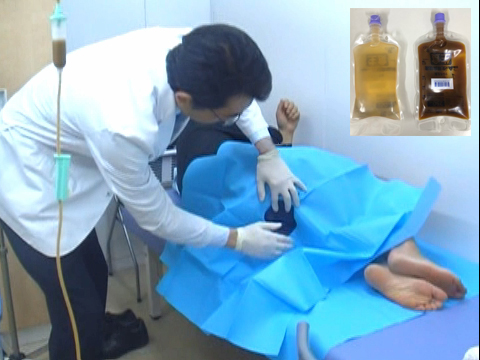
During the first transplant, which was no more than 3-4 minutes after the start of the transplant, I felt the swelling in my sinuses, which had been the source of my problems, go down.
The next day, I noticed that the swelling in my prostate, which had been bothering me for many years, as well as my sinuses, subsided. Intestinal flora transplantation is done in a course of three or six transplants, and with each successive transplant, these swellings slowly subsided.
After the first transplant (6 sessions in Feb-Mar 2019), I was free from severe sinusitis symptoms and prostate swelling. I had three additional transplants two years later (March-April 2021) to completely eliminate the few remaining minor sinusitis-like symptoms (minor stiffness in shoulders and back muscles), and the few remaining minor symptoms do not bother me at all now.
After the transplant, I am able to sleep and wake up normally and go about my daily life with a happy feeling as if I were taking a hot spring bath. I don’t think I have ever had a condition where both nasal passages are always running smoothly. I realized that this is the prerequisite for promoting nasal and abdominal breathing and stabilizing my mental state, and I am grateful to the intestinal flora transplant for providing me with this prerequisite.
Q4. PLEASE TELL US ABOUT ANY LIFESTYLE HABITS OR WAYS OF THINKING THAT YOU ARE TRYING TO LIVE AFTER THE TRANSPLANT
1) “SuperFiberSalad” made with okra, spring onions, yams, mekabu, natto, and antibiotic-free chicken egg yolk; 2) Vegetable Stick with raw carrots and raw radish (with hummus and taramo); 3) Avocado and fat-free yogurt (salty); 4) Soy milk yogurt with oligosaccharides and chrysanthemum powder. The menu is eaten daily and a fiber rich diet is practiced. The next morning I have a perfect bowel movement and can check the honest response of my intestinal flora.
I don’t eat meat from livestock raised with antibiotics or farmed fish as much as possible except when socializing, but even so, living in the civilized world, I cannot prevent the possibility of some residual antibiotics or ph-regulators entering my body, even if only slightly. In this sense, I would like to do a transplant every few years to keep my intestinal flora in good condition and to maintain the comfortable state that I have finally obtained.

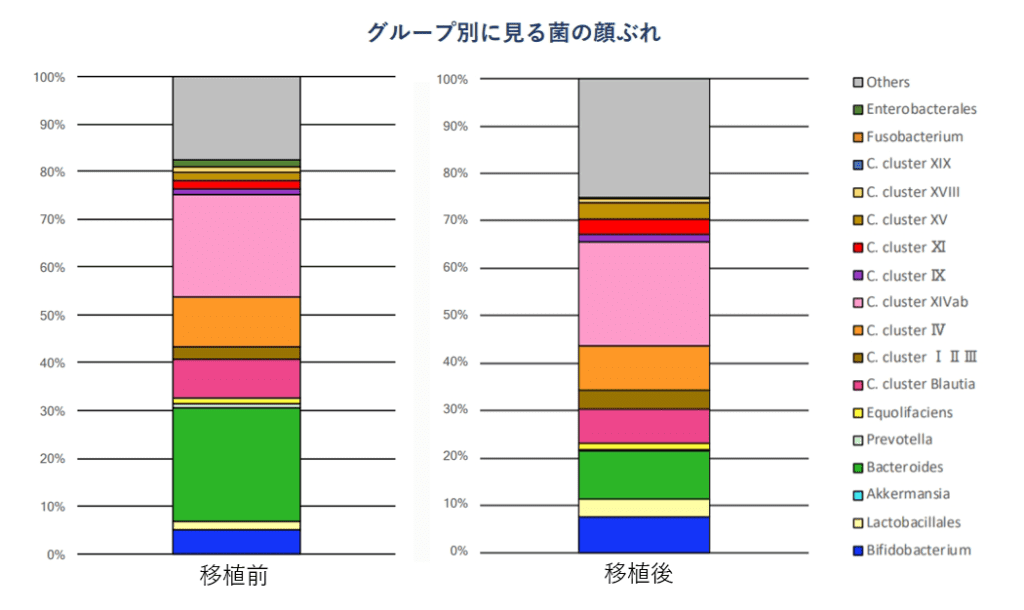
▼Flora balance test results