

Previous Articles
- We are pioneers of stool transplants. [Just before the Annual Meeting, a glimpse Vol. 1
- Making Fecal Transplantation a Safe Treatment [Last-minute Glimpse before the Annual Meeting Vol. 2
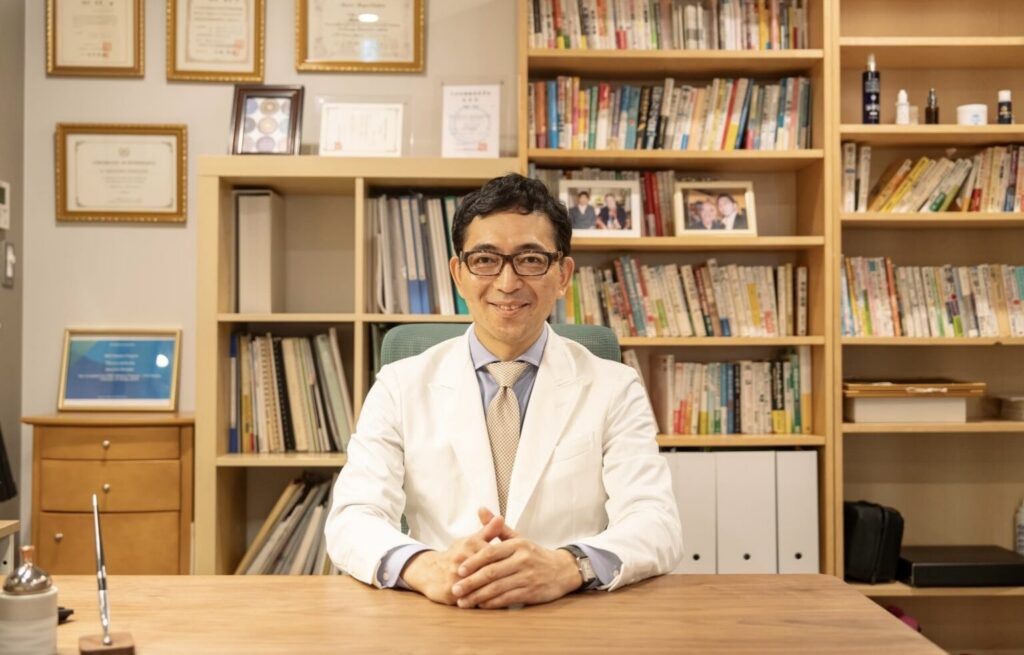
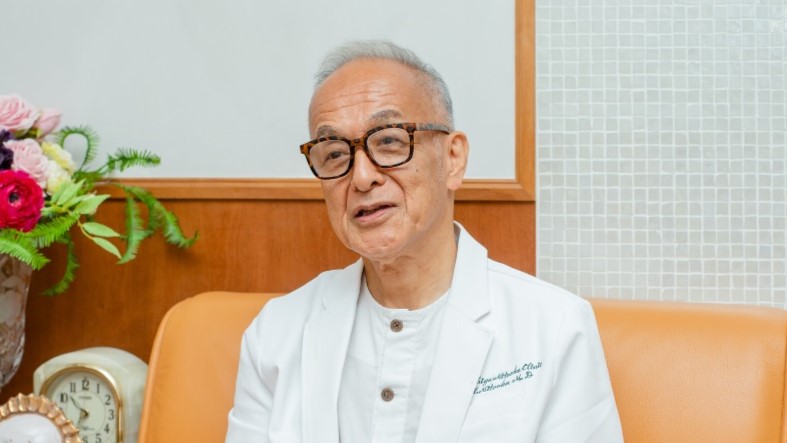
Today, we would like to introduce Dr. Shirotani of the Luke’s Ashiya Clinic in Hyogo Prefecture.
Johya Sensei!
Oh, by the way, your website was recently redesigned! It’s so much easier to look at!
Our clinic does not rely solely on drugs, but helps all patients to bring out their “self-healing power” by identifying and addressing the root causes of their symptoms.
Our third annual meeting is coming up, and we need your enthusiasm!
Over the past 20 years of clinical practice as a gastroenterologist, I have
been able to learn from and become aware of a great many patients.
In addition to this experience, and most importantly, through my own experience of suffering from a serious illness, I have come to value the perspective of “the kind of medical care I would like to receive” as a patient.
Well, I guess quoting from a website isn’t enough to have a conversation…
I heard that you also focus on psychotherapy and nutritional therapy, and that your style is to support the patient’s ability to heal as a whole body connection, rather than looking at the disease from a regional perspective.
In our clinic, we focus on adjusting the disturbed “intestinal environment” and “brain environment” in order to achieve the fundamental treatment of various diseases.
In addition, from the viewpoint of the “intestinal bacteria-gut-brain correlation,” it is expected that adjusting the “brain environment” will enhance stress tolerance, resulting not only in improvement of the intestinal environment, but also in enhancement of the therapeutic effects of systemic diseases.
Oh, it’s connected.
Click here for the detailed page of the 3rd General Meeting where Dr. Shirotani will be speaking.
A case of atopic dermatitis showing improvement 4 months after intestinal flora transplantation
The onset and exacerbation of atopic dermatitis (AD) is thought to be caused by an immune imbalance due to a combination of factors including heredity, environment, and nutrition, and the involvement of epithelial cell immunity, innate immunity of the skin and intestinal tract, and regulatory T cells has been pointed out. Bacterial flora coexisting in the skin and intestines has been attracting attention as the largest environmental factor that influences our health, and it is said that the gut-brain axis and gut-skin axis are related to the pathogenesis of AD. Pre-probiotics and food-based prevention methods that take into account the intestinal microbiota are being studied. Although the detailed mechanism has not yet been elucidated, it has been suggested that the skin barrier function is affected by metabolites produced by the intestinal microbiota and physiologically active substances such as cytokines.
WE REPORT A CASE IN WHICH A FEMALE AD PATIENT IN HER 30S UNDERWENT INTESTINAL FLORA TRANSPLANTATION AND SHOWED A CHANGE IN INTESTINAL FLORA BALANCE AFTER THE TRANSPLANTATION.
I was extremely moved when I heard about this person’s case from the doctor. I wonder how complicated the cause of atopic dermatitis is and how Dr. Johya was able to unravel it.

A doctor who has had his entire colon removed explains the wonders of the intestines and intestinal bacteria.
Intestinal disorders, cancer, atopy, depression, autism, chronic fatigue ……
From diet and lifestyle to put an end to “physical and mental disorders” to
the revolutionary treatment method “intestinal flora transplantation”.