

About 100 trillion intestinal bacteria live in the intestines and perform many very important functions for physical and mental health.
They are generally called “good bacteria,” “bad bacteria,” or “opportunistic bacteria,” but they are all necessary.
There are as many as 30,000 types of intestinal bacteria that have been found at this point in time.
The type and balance of bacteria each person has is different, and this balance is called “intestinal flora balance.
A wide variety of intestinal bacteria live in the intestines of healthy people, but the intestinal flora balance of people with some disorder or disease may be biased toward certain bacteria or have a low ratio of bacteria that are considered useful.
If the balance is too far off, we recommend transplanting the intestinal flora of a healthy person, but there are ways to improve the balance on your own.
In this issue, titled ” 7 Articles for Improving Intestinal Flora Balance with Diet,” we will share with you the key points of an intestinal flora-friendly lifestyle that can be easily implemented.
This method is also recommended for post-transplant patients.
Number one, the first bite starts with marine protein.

Try eating marine protein at the beginning of your meal once a day.
Marine proteins are fish, shellfish, and seaweed.
Marine proteins send a signal to the entire body that “I’m about to eat” before the food reaches the intestines from the mouth.
It then reaches the intestines, activates intestinal bacteria, and moderates the rise in blood glucose levels.
We recommend chirimen-jako (dried baby sardines), which can be kept on hand.
No. 2: Get enough fiber in your diet.
“dietary fiber for weight loss”
and “dietary fiber for constipation”
It is well known that dietary fiber is good for the body, such as
The reason why fiber is good for you is that fiber actually serves as food for the bacteria in your intestines.
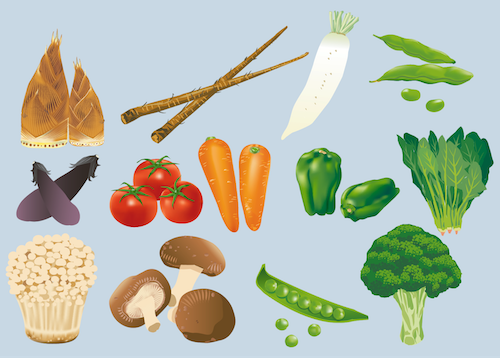
Foods high in dietary fiber include, for example
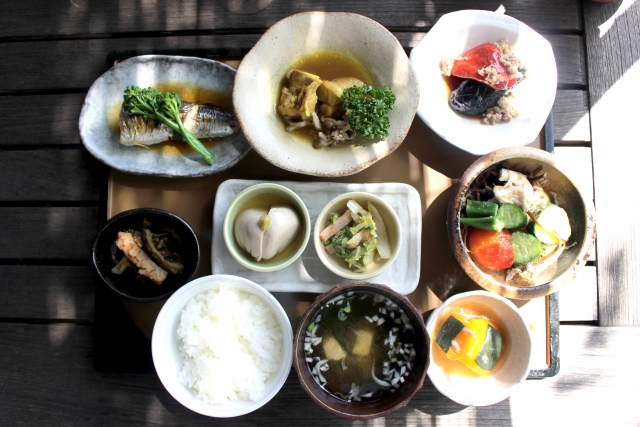
Vegetables, seaweed, konnyaku, natto, mushrooms, burdock root, soybeans, and rice. Etc.
To foster diverse intestinal bacteria, fiber should also come from a variety of foods.
No.3 Drink vinegar

Many enzymes work in the body.
In order for these enzymes to work actively, it is important to maintain a mildly alkaline environment in the blood.
The easiest way to do this is to drink vinegar.
By temporarily bringing the intestinal environment into an ideal state of mild acidity, the bacteria that produce organic acids such as acetic acid are energized and the pH of the blood is regulated.
No. 4 Drink plenty of water.
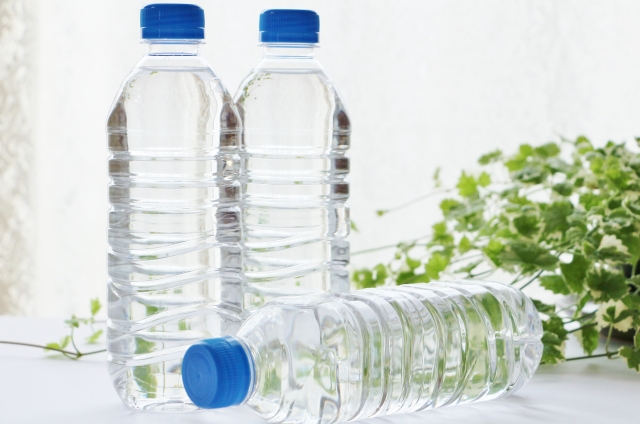
Hydrogen produced by intestinal bacteria is important to prevent cell oxidation (aging).
Hydrogen can dissolve in water by about 17%, but as water is depleted in the body, hydrogen is also less likely to be produced.
Some people believe that “water makes you fat,” but water does not make you fat.
The only reason you feel that way is because your body is unable to expel water properly and you are swollen.
In that case, the solution is not to “not drink the water”.
No. 5 Do light exercise after the last meal.

After dinner, “I’m exercising!” and move your body with awareness.
This stimulates the intestinal tract and helps intestinal bacteria to increase fiber.
No. 6 Create 7 to 8 hours of fasting time in a day.

Allow 7 to 8 hours of fasting time between the last time you ate something and the next time you eat something.
This “fasting” includes food and alcohol, as well as water and cigarettes.
During this time, the bacteria in the gut do not have to devote energy to digest food, which boosts the body’s immune system. They also reset the body’s internal clock.
There is a popular trend of fasting for 3 days or something like that, but from an intestinal bacteria point of view, 8 hours is enough.
No. 7: Gratitude.

The last thing is to be thankful for being able to eat.
This is surprisingly, very important.
Summary of 7 bullet points to improve intestinal flora balance through diet
- Number one, the first bite starts with marine protein.
- No. 2: Eat a good amount of fiber, which is the energy source for intestinal bacteria.
- No.3 Drink vinegar
- No. 4 Drink plenty of water.
- No. 5 Do light exercise after the last meal.
- No. 6 Create 7 to 8 hours of fasting time in a day.
- No. 7: Gratitude.
First, check how many of the seven items you are currently doing.
If you have not been able to do any of them, we recommend that you work on them little by little without any difficulty.